Science
I engineer interpretable AI that reveals why therapies succeed or fail in individual patients, and I translate that insight into better diagnosis and treatment. My work sits at the intersection of artificial intelligence, systems biology, and medicine.
Multimodal, interpretable AI for biomedical data
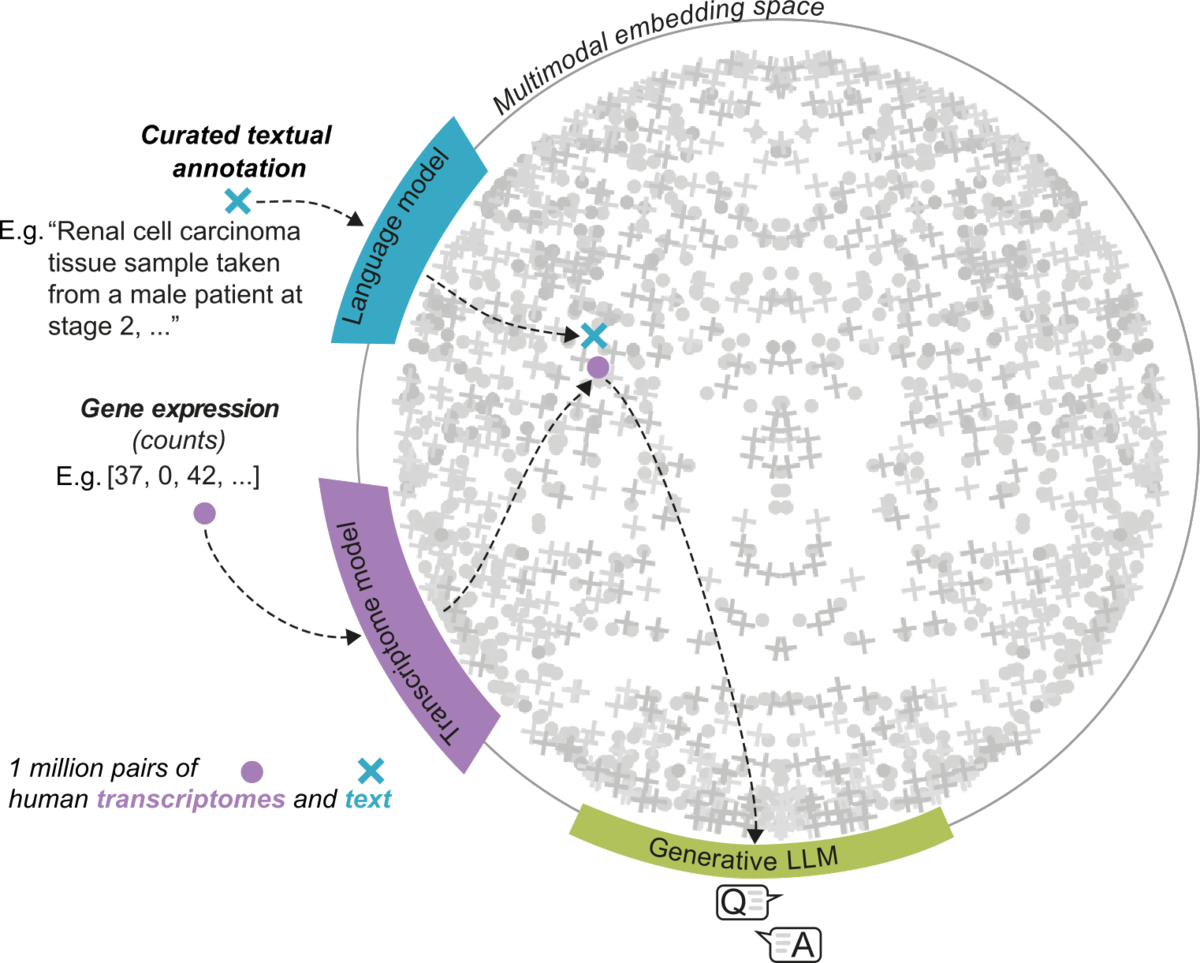
Large-scale biomedical data, especially single-cell genomics, has created an analysis bottleneck that keeps biologists from directly interrogating their own data. I conceived and led CellWhisperer, a first-of-its-kind multimodal AI that grounds single-cell transcriptomes in natural language, turning explorative analysis into a chat conversation. At Stanford I extended this paradigm to histopathology and cancer immunotherapy with SpatialWhisperer. The tools are open-source and accessible through intuitive web apps, and the community is adopting them fast.
Integrative frameworks for functional genomics
Gene expression reflects a combination of regulatory mechanisms that any single assay captures only partially. I build integrative methods that extract robust signals from complex, multimodal datasets. In my PhD I combined orthogonal microRNA target-prediction algorithms with three molecular assays and validated the results with CRISPR-knockout experiments to pinpoint bona fide functional targets. I applied the same integrative philosophy to genome-scale CRISPR screens, from conserved coronavirus host factors to modifications that boost CAR T cell efficacy.
Simulating and engineering biology with AI
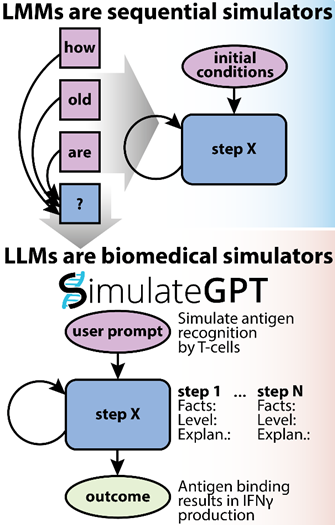
I develop AI tools for designing cells and molecules and for simulating biology. I led a proof-of-concept, SimulateGPT, that formulates biomedical problems as "what-if" questions a large language model reasons through step by step, showing that these models can act as qualitative bio-simulators. For molecular design, I built PAVOOC, a web application that designs CRISPR gene knockouts directly on 3D protein structures via an AI guide-efficacy algorithm. Together, these turn AI into an interactive instrument for engineering biological systems.
Open, impactful, interconnected science
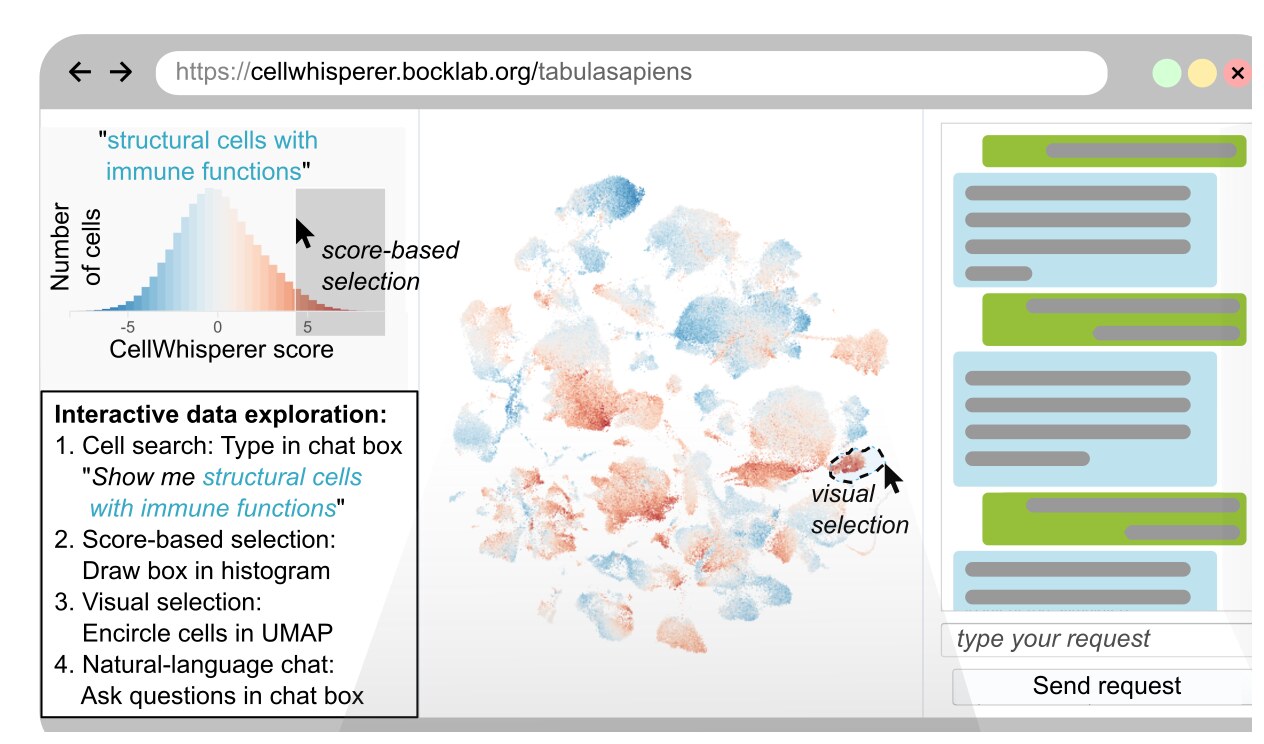
Amid declining trust in scientific institutions, I counter the trend through open science, public engagement, and accessible tools. CellWhisperer was built for democratization: it integrates the open-source CELLxGENE Explorer as a self-deployed public web app, so non-computational users can run sophisticated single-cell analyses. I bring research to non-academic audiences, from the Chaos Communication Congress (38C3) to Vienna's Long Night of Research, and I moderated open-science panels for the OILS Zurich initiative. Through the EU-LIFE postdoc working group I created a funded exchange program for early-career researchers.